Showing posts with label writing. Show all posts

Thursday, April 30, 2026

Slowing Down To Do Better Work

Mowing time again

When my childhood friend Dominic made a heroic decision to try organic farming after a layoff, just a year after Nan and I moved to the country, I paid close attention. He stayed at it for the better part of a decade, using antique equipment. His experience taught me a few things that I have brought to my own gardening and tending rural land. 

Of all I learned, one lesson stands out most, a principle I call “slowing down to do better work.” I wish that Dom and I had read Wendell Berry’s essays sooner. Berry’s thinking about local culture, agrarianism, and the proper use of tools would have saved us time and money while adding pleasure and better stewardship of the land. The scale of Berry’s economic model maps well onto my personal belief that Distributism can replace corporate capitalism in a century that will see, thank goodness, declining human population.

First, though, some specifics before thinking big and long-term. Central Virginians, save during drought, must mow grass close to the house weekly all Spring, Summer, and most of the Fall. Fields get fewer mowings. Dominic noticed how the old-timers near him in Hanover County would mow their fields slowly with the throttles set high. This burns more fuel but means cleaner cuts when creeping over the fields at the pace of a slow walk. We have here the antithesis of “mow blow and go” suburban lawn “care,” nearly always farmed out to a company these days. I see the kids who do this on zero-turn mowers that race over a yard. I suppose the homeowners are too busy after work to tend the yard, off playing golf or chauffeuring the kids (who would be better off in a neighborhood pickup game) to kid-sports events.

Many suburban lawns are often a toxic nightmare, anyhow, so let’s move on to something sane. Most of us are not Berry with his horse-drawn equipment yet the same philosophy can guide our work. For the rural mower who aims to protect and improve the topsoil, the slow-speed, high-rpm method means that grass and weeds are cut cleanly, not torn by the blades (assuming the blades are sharp). Yes, it takes longer but when I gathered and stacked the hay, I found it clean and superior to what I had formerly done in haste. The hay goes to our garden or chicken run, where the birds scratch it around and eat the seeds.

Berry writes about this philosophy of farm work in his essay “Horse Drawn Tools and The Doctrine of Labor Saving.” He decided to forego the purchase of a used 8N Ford tractor and mow with a team of horses and an International horse-drawn mower. He found that his equipment made better hay than did his neighbors’ tractors. His story will perplex those farmers who consider even the 8N a bare-bones machine as outmoded as a horse and best seen in a museum. I can attest that my own 1952 8N is a bulletproof, simple machine that has needed nothing in the 20 years it has been in the family, beyond fluid changes, fuel, two tire tubes, some paint, and a few sets of spark plugs. I learned to plow and mow on the machine and it still does useful chores, including cutting where we gather hay to stack in our barn after it cures.

While I have no plans to farm with horses—we raise chickens, not row-crops—some of Berry’s ideas have influenced me deeply. We looked at expensive hay-baling gear for small square bales. For now, it saves us money to buy straw and store just enough hay that we can manage raking, tedding, and transporting manually; we might get a dry stack the size of an SUV in a good year and need 30 square bales of straw as well.

I contrast this to what our Deere dealer talks about: air-conditioned cabs, round bales so huge we would need hay spears and plastic wrappers to move and season them. No thanks. The last thing we want is more complexity and more unsustainable materials on the farm or going to the landfill. Speed breeds those things, and Berry rightly sees the debt-trap they set for a small farm. 

Some expenses are inevitable, of course. When Dominic was still farming, I encouraged him to find one reliable modern diesel tractor in place of his handful of sometimes unreliable gas-powered antiques. But even with new or nearly new equipment, a farmer should start small. A dealer often tries to sell “just in case” power and attachments. They can be added later. I did recently spend $500 to set our utility tractor and implements up with Deere’s iMatch hitch, so I can hook up the rotary mower in a minute, then drop it to get a different implement. As I age and have arthritis in my left hip, such accommodations have proven to be a godsend.

Yet I waited 14 years to upgrade the tractor, after 600 hours of service. We might all apply Berry’s philosophy that way. It works off the farm too. We are today using AI to enable us to do more work in a shorter span of time, but what gets lost in all that haste? How much poorly-conceived “good enough” work, like poorly-mowed fields, gets completed as a result? Berry states that instead of building good soil, hasty farmers impoverish the land. With generative AI and other purportedly labor-saving technology, what are we doing to improve our minds and spirits? What are we doing to make our clients’ lives and our work better?

The next time you are asked to hurry a job, reply that you want to do good work.

When drafting this post, I wrote it first by hand. Checking Duck Duck Go, I verified the location of an e-text of Berry’s collection of selected essays The World-Destroying Fire, then used that e-text to help me find and annotate passages in my paper copy. No contradiction here at all. Using the technologies of print and Internet together led me to work methodically and do better work. If you want to see what Berry advises, you can find the essays here.

I turned off the AI assistant too.

Sunday, February 1, 2026

Thinking Little With Wendell Berry


Last year, I picked up my first volume of Wendell Berry's essays. I'd read some of his poetry, but until recently, not the prose.

I found a kindred tractorpunk, even if Berry and his son work their land with animals. I'll point you to one essay in particular, "Think Little," that can be found free of charge at the Web site for the Wendell Berry Center. In particular I want to note a couple of his premises, ones that could be adapted to a Distributist lifestyle even in a big city:

  • "The Confucian Great Digest says that the 'chief way for the production of wealth' (and he is talking about real goods, not money) is 'that the producers be many and that the mere consumers be few…. ' ”  To me this means that in a Distributist economy, rather than a Corporatist or Socialist one, we all are makers. We trade, barter, and yes, pay in currency when we must. Above all, we avoid credit.
  • "Our model citizen is a sophisticate who before puberty understands how to produce a baby, but who at the age of thirty will not know how to produce a potato." Stunningly true, even if I struggle to grow white potatoes still. Barbara Dalmrosch said something similar in her wonderful book The Garden Primer: we can make change happen by growing just one thing we like to eat. That could be the potted basil on your apartment balcony. Start little, think little, but imagine big as you influence others.
  • "[T]he remedies are not always obvious, though they certainly will always be difficult. They require a new kind of life-harder, more laborious, poorer in luxuries and gadgets, but also, I am certain, richer in meaning and more abundant in real pleasure. To have a healthy environment we will all have to give up things we like; we may even have to give up things we have come to think of as necessities." It's a small task to learn to repair or hold on to common items; I just refurbished my old phone rather than give into Verizon's seductive texts (now blocked) to upgrade it (at more than $250 per month).  A $20 case, some hours removing photos and apps so I could update the OS, and now I have a phone that will last me a few more years without incurring more e-waste or personal bills.
  • "Odd as I am sure it will appear to some, I can think of no better form of personal involvement in the cure of the environment than that of gardening. A person who is growing a garden, if he is growing it organically, is improving a piece of the world." Not odd at all, and certainly less odd than when Berry wrote the essay. Most folks I know keep some kind of garden now, often with local varieties of plants and some food crops. 

I've gotten too critical of urban and suburban life at times. I still could never imagine living in suburbia, though I know some suburbanites who are minimalists and avoid the rat-races of conspicuous consumption and look-just-like-the-Joneses conformity. Moreover, the 'burbs of the 2020s are not those of the 1950s or 70s. You'll find local markets and businesses aplenty, from a halal grocer I frequent next to my locally-owned Yoga studio, to a locally-run bakery or three. I have found cobblers who still fix shoes, tailors who mend clothing, a great local bar, and places that repair small electronics or engines. 

 I'll end with Berry's prescription for change:

"We are going to have to gather up the fragments of knowledge and responsibility that we have parceled out to the bureaus and the corporations and the specialists, and we are going to have to put those fragments back together again in our own minds and in our families and households and neighborhoods. We need better government, no doubt about it. But we also need better minds, better friendships, better marriages, better communities. We need persons and households that do not have to wait upon organizations, but can make necessary changes in themselves, on their own."

Can we do this? We have to. The philosophy should appeal to Libertarians of the earth-loving rather than broligarch sort, too. 

You may, like me, have already started. I'll be at a Board of Supervisors meeting next week to mention the economic madness of building soon-to-fail giant data centers in our county. We are involved in a law suit against this plan, a concept voted down by supervisors in the counties north and east of us. If we don't try, we lose by default. Yet if we lose, we keep trying. Onward.


Monday, March 31, 2025

Semi-Sufficent? Is that Enough?

Skidding a Poplar Log

I've written here about the folly of trying to be self-sufficient, instead turning to the notion of self-reliance, an Emersonian virtue I embrace.

Recently I read a fine post from Kirsten Lie-Nielsen, a homesteader, that she and her spouse have left farming largely behind, at least as a full-time, rural venture. This experience, one where she attempted to become an influencer but met hostility for her left-wing political views, gave me pause about how I approach rural life. 

These words in particular strike me as wisdom: 

We have no aspirations towards self-sufficiency, but a desire to experience varied aspects of life while remaining connected to our food sources. I now have a set of skills I can draw on if I find myself in the kind of calamitous situation that sections of the homesteader community are prepping for. I feel a deep appreciation for the labor of food production. I’ve also learned to embrace the freedom of progress.

When this blog began, I thought that I might use my writing skills to follow the path of a farmer like Joel Salatin. Now I've my doubts, and not because Salatin and I are very different animals when it comes to politics and religion. I deeply respect the way he manages the property at Polyface Farms, and I've had two nice chats with him about how one can run a farm sustainably. I no longer follow his blog, however, because of right-wing extremism and Doomerism, mostly by his readers, a similar pattern that led me away from another writer who once used to visit my classes to discuss his work. 

In case of a national disaster, no one is an island, no matter how many generators, solar panels, firearms, or cans of food on hand. Only community and self-reliance might ease the troubles, though I'd prefer we search for ways to avoid them altogether.  

I'll employ a simple example of semi-sufficiency here: the other day, my brother-in-law and I skidded two 12' long poplar logs out of the woods. A huge twin-trunked tree had split in a storm; we wanted to save part of it for his sawmill. Poplar is a delightful wood to work. I've made a good bit of weatherboard for our farmhouse from trees we cut, milled, and planed in years past.

I could never handled that sort of job alone. We used two saws to cut the logs (for when one saw gets pinched and stuck; it happened once to me). We then used a long cable and electric winch to skid the logs across a wet-weather stream at the back of our property, with me walking beside the skidway with a Peavey Tool to roll the logs around when they got caught on something. Finally, I got on my tractor and hauled the logs the final distance to a trailer.

No one person I know could do this. With my spouse still recovering from a broken leg, she couldn't help. So in hard times, who can you count on to help with rural work? My other best helper, who lives nearby, voted for the other side, but we get on well.

Community, despite adversity and personal differences, keeps the Amish on the land, but influencers have followers, not co-workers.

That's the mistake too many misty-eyed homesteaders make who want to be famous. 

Wednesday, March 27, 2024

When Retirement Nears, Making Plans

Back in 2017, I attended a workshop at a national conference in Portland, Oregon. We were there at the national meeting to discuss writing pedagogy, but I figured I was within 10 years of retirement. I then went to a session on how we find meaning when our day jobs end.

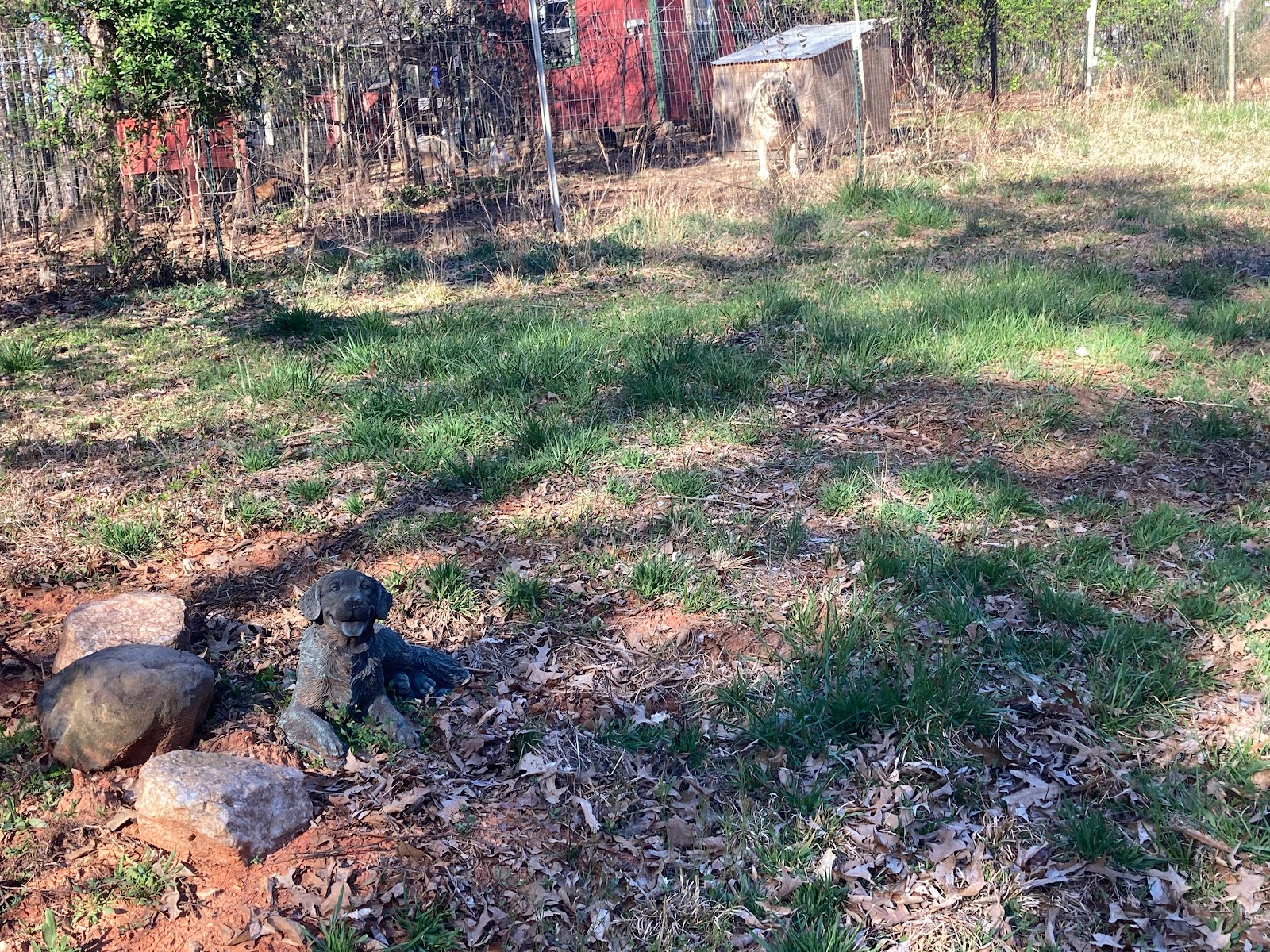
The other day, 3 years ahead of schedule, I notified my employer that I'd be ending full-time work for the university at the end of the year. I'd just harrowed the hillside below the spot shown above; we'd buried our first livestock guardian dog, our beloved Vela, at the top of the hill. Life is short. In 2017, Vela had been with us 2 years and was in her vigorous middle years. Now, she's resting.

Big decisions when to retire are naturally fraught with emotion, but honestly, it was the happiest decision I've made in a long time. I don't hate my job or colleagues, but unlike many of them, I have a Plan B waiting. It differs from many retirement plans I hear such as "I'll travel more" (great!) or "I'll be more active in my church or community" (fine!).

I'm neither religious nor able to travel as much as other academics do. Luckily, I find my joy in work with words, machinery, and plants. For so many years, I realized that I love the solitude and hands-on experience of writing, gardening, forestry, and tending to land. I'm happiest on a tractor for many hours on end, coming in the house to share lunch with my wife and discuss what we've been doing that morning. My favorite pastime involves fixing and maintaining machinery and equipment; I find it much more rewarding than dealing with the messy intricacies of classroom or office. I'm getting more social, because it's healthy, but generally, others wear me out. 

As my late father-in-law put it, when done with a task "I like something I can put my hands on."

In Portland we discussed how a mere hobby would not be enough to fill the hours that require intellectual company. My farm-work is not a hobby in the same way as, say building models or restoring an old car, but I got the message. I took it so to heart that after the conference, I began a book project that saw publication in 2019. Nowadays, my plans are less grandiose, but I plan on more fishing and hunting. Those hobbies are great fun but don't quite fill the bill for a healthy retirement.

Having given lots of thought to this transition since 2017,  I'd advise any of you thinking of joining me in the long twilight of a working life to take stock of what brings you joy physically, emotionally, and intellectually, especially as your physical abilities will begin to taper off. A guy named Mr. John Deere helps with that, to a degree, as I find it hard to hire day labor, even for $20/hour in cash plus gas money and lunch. But no pay will buy me intellectual debate over a lunch table.

For that reason, I plan to teach part-time in retirement in my university's Master's Program for continuing students. Most of the work will be full-remote for small classes, allowing more time to help my students develop intellectually. Given my research and writing interests, I plan to be on campus weekly and that will include lunch with old colleagues, attending arts events and seminars, even going to a professional conference every few years in areas where I'm still writing professionally.

All that without the messy things: committee assignments, office hours for undergrads, lots and lots of grading.  That means more solitary time on the tractor or behind a chainsaw or at a work bench. I've lots of ideas about managing invasive species, cultivating land for pollinators and native wildlife, and more.

You'll read about them here.


Thursday, June 30, 2022

Rock and Sun: Desert Solitaire at Age 61


When did I first run into Edward Abbey? My 20s, certainly: a dangerous age to make his acquaintance. Had life gone in a different direction, I might have blundered out into the desert and died there. Lots of young men get tempted to do stupid things after reading certain authors.

Nearly 40 years later, nearly the same age as Abbey when he passed, I found myself in his neck of the desert, the place he most felt at home. In Prescott Arizona's Old Sage Bookshop, a copy of Desert Solitaire appeared. My wife spotted it, thank God, because I'd given my old paperback away and had been hankering to read the book again while we were in the West. I wanted to see if Abbey could cast his spell on me a second time.

The essays in the 1968 book, set during Abbey's time as a ranger at Arches National Monument in the late 50s, opened up for me in a way they'd never earlier. Partly I've lived a lot more, and partly I have become familiar with authors Abbey notes well, from Joyce to Chuang-Tzu. The man Abbey, at least his younger, angry self who did this writing, did not escape my censure so easily. He was in his late 20s and early 30s when he did this writing, and he comes off as a bit of womanizing misanthrope, a guy we might call a Doomer today, eager to see technological civilization collapse. Easy to claim that at such an unripe age, I thought; one broken ankle and your post-collapse adventures would end forever. The naive enthusiasm and egotism that leads him to get trapped in a side-canyon that nearly kills him remind me of the antics of the Beats; they too have sent more than a few young men to their dooms. I'm looking at you, Chris McCandless and Timothy Treadwell.

Yet Abbey redeems himself, in the prose he crafts and in his ultimate, hard-earned humility. His epiphanies of being so small in so vast and uncaring a landscape make an older reader nod in recognition, something a selfish 20-something could never do.

And the writing! Kerouac would never type a sentence like this:

Turning Plato and Hegel on their heads I sometimes choose to think, no doubt perversely, that man is a dream, thought an illusion, and only rock is real. Rock and sun.

The beautiful indifference of wild nature, moving according to its own calendar, redeems Abbey and his essays, published in the rebellious year of 68. Time does that; petroglyphs from 700 years ago look permanent, until one grapples with the deep-time of a 600-million-year-old vista where the artists put down their marks. As Abbey learns these truths, he's at his best when confronting a stubborn rattlesnake or when the side-canyon temporarily defeats him and he breaks down crying, facing starvation, then mummification, in a spot he cannot escape. Nature repeatedly slaps him silly, and he learns from the harsh lessons. Kerouac and Neal Cassady never learned; Kerouac died a sad drunk, and the same year as Abbey published the  book, Cassady's body was found beside a railroad track in Mexico, dead from exposure following a party. Neither Beat made it out of their 40s. They had raced across the desert in a car they drove to pieces, saying they were "digging" it but really only digging the sound of their own unceasing voices. They should have shut up for a while and listened to their friend Gary Snyder. Or Abbey.

Conversely, Abbey spends a lot of time in this book being quiet. After all, he's alone for much of it. To whom is he going to speak? A Prickly Pear?

If you do not know Abbey's fiction, save them and start here first, but read with care if you are still young or impressionable. The book spawned a cult following for many reasons, some good. Abbey and the writers he knew and influenced, like Terry Tempest Williams, in turn changed the nation's ideas about the sanctity of untouched wilderness. Even as what he called "industrial tourism" thrives, we rarely hear any longer calls to dam the Grand Canyon or run paved roads into every remaining tract of wilderness. The Park Service is not perfect, but it stands a little closer now than in the late 50s to Abbey's vision in its "leave no trace" philosophy. Tourism helps to fund preservation.

Perhaps I'm overly charitable in a time when a new and global threat to civilization has arisen. The pressures on us grow every year with additional gigatons of carbon dioxide. We might end up, in a few centuries, with little more to show for our folly than postmodern petroglyphs beside drowned coastal cities. 

I would like to leave a better world to the bright and eager young people I teach. Their children will hate and curse our selfishness and laziness, as bitterly as Abbey did at  his bleakest moments.


I am uncertain if I will read Desert Solitaire again. I don't have another 40 years, but one other fact remains clear. The past 40 mark how far I have come from the angry young man who, like young Abbey, felt it best for a rotten and rapacious civilization to fall.

Now I want us to make it. Not for my short-lived self, for a human nation sure to fall some day, or even for an undying God. I'm a Deist and know now in my bones that God, who blessed us with this lovely world, does not meddle. I learned that from Primo Levi and Elie Wiesel. We are free to wreck or thrive. God made chaos and put evil inside us too. Get behind me, Satan, you sham, you lie. Loser in the basement, you don't exist, but we have hell enough in each of us to make a hell right here.

Why keep hoping we'll endure and do better? Hope makes one happy. Even if it is all just rock and sunlight, we have others around us. Human contact is sacred, too, in whatever time each of us has.


Thursday, August 15, 2019

Why Bother? Well, Why Not?

I have written here before about my near-obsession with metaphors and sayings that relate to time.  I will circle around to what this has to do with sustainable land-management in a bit. Meanwhile, let's rocket into the future. The far far future.

Call my collecting phrases about time a favorite pastime. I often hear in my ear what Paul Bowles, one of my favorite writers, calls "the hiss of time." Just so, yet if you think long and hard about how time works, it can make you batty. Consider the idea of Deep Time: those eons when no human walked upon the Earth and those eons to come when we shall not longer walk here.

Claude Albritton's book The Abyss of Time, a 1981 finalist for the National Book Award, showed me how insane a few influential folks got, when presented with the facts: that the age of Mother Earth is so vast as to stagger the imagination and put our hubris right in its place. Those misguided folk who think the Earth to be 6,000 years old are prime examples of the sort of anti-rationalism that a confrontation with a hard truth can bring. Their intellectual first cousins deny climate change.

We should perhaps all show a bit of humility. As an article in The Atlantic Monthly by Peter Brannen shows me rather conclusively, these deniers and I need to just get over our ridiculous squabbles. In time, in fact, to a future geologist:

The clear-cutting of the rain forest to build roads and palm-oil plantations, the plowing of the seabed on a continental scale, the rapid changes to the ocean and atmosphere’s chemistry, and all the rest would appear simultaneous with the extinction of the woolly mammoth. To future geologists, the modern debate about whether the Anthropocene started 10 minutes ago or 10,000 years ago will be a bit like arguing with your spouse on your 50th wedding anniversary about which nanosecond you got married.

Do yourself a favor and read Brannen, then go pick up H.G. Wells's masterful The Time Machine. The novel has an ending so difficult for President Roosevelt that he demanded that Wells tell him that the future would not turn out that way. I do not know how Wells replied, but it must have been delightful to have a President who read books, and it would be delightful to have one again.

My little plan, Deist and reader of Stoic philosophy that I am, is to is employ whatever time I have to making things better for those who come after me. Yes, we'll all end up a millimeter-thick stratum of organic and inorganic matter, unrecognizable in geological time. If Brannen's claims are correct, as the geological record tells us they must be, I think we still have a moral imperative not to inflict suffering needlessly. By trashing the land, we make life more difficult for those who follow us.

This alone should let us get through this time of a catastrophically bad President, a culture "war" in our nation, and a parade of bad news globally. Yet to do nothing because our species is ephemeral seems tragically short-sighted.

By improving the land and teaching others how to tend the land, eat well, leave camp better than they found it, we are doing something meaningful, even though our names, deeds, possessions, nation, language, civilization, and even species may be gone sooner than we could imagine. I would like those who come after us to love and respect us. Not curse us.

In an odd way, one of our most nihilistic of writers would agree. Bowles wrote, in The Sheltering Sky, "There is a way to master silence. Control its curves, inhabit its dark corners, and listen to the hiss of time outside."  This is not a call to inaction. Bowles was a thoughtful mentor, talented composer, and careful writer his entire life, not a decadent. He helped other writers. He employed one of Morocco's last traditional story-tellers as his helper, then recorded and published the stories. It helped preserve a tradition that seemed doomed to vanish like a city buried by the Sahara.

Given that you are a speck riding about on a speck that circles a glowing speck hurtling through infinite darkness, how will you, my fellow speck, listen to the hiss of time?

I'm going to keep testing some reusable canning lids and report back to you. I hear they may fail a bit more often than the metal sort. How's that?

Image courtesy of Wikipedia Commons. Rock those strata!

Wednesday, October 12, 2016

Fall and All That


Around this time of year little weekly and freebie papers (as in newspapers, remember them?) that usually focus on phone-sex ads and supermarket coupons give their beleaguered staffs a little freedom. These writers then run sentimental pieces about the season.

Let me essay that with my quivering quill, "The russet leaves of the towering oaks, 'neath which the scampering squirrels nimbly put away their toothsome treasures against the bitter blasts to come. Oh, as I once told Linda, my lost love, summer hath all too short a lease..."

Alliteration. Adjective strings. Really bad infusions of pseudo-Elizabethan English.

Out, damned feel-wistful columns and a pox upon thee! I have other sentiments to express about  Autumn. Namely, that it sucks to lose two old colleagues in two days. And all your squash.

First, the humans lost. Both were here at the university when I arrived in 1991; one had been here when my late brother enrolled in '66, only to be booted two years later right into the US Army and, but for the deescalating grace of Richard Nixon, all the way to Danang. Nearly fifty years have flown since then.

Our campus flag flies at half-staff one day for each of my old academic commiserators. A day later, the little slip of paper with information on their lives and accomplishments, put in an acetate holder on the flagpole, goes right to the recycling bin.  Game over.

With all that in mind, 'neath the towering oaks around Westhampton Lake, I took a pleasant stroll today to think about what is really important not on a college campus, but beyond its boundaries. For me, it was I learned in a difficult summer about working the land.

The clouds did indeed look like October, and the lake has grown more woodsy since I began walking around it, 'neath various moons, with girlfriends back in the 1970s.  Days like this, with a good northwestern breeze, invite reflection. The light is slanted so the blue deepens in the sky.

To a Deist like me, it becomes consolation enough. There was a time thirty years ago, however when I stopped believing in a Providential God and nearly went full-on Paul Bowles into existentialist atheism. You know, The Sheltering Sky. That sky is there, Bowles claims, only to keep us from recognizing the horror beyond it. That type of nihilism is terribly easy.

Today I am less Bowlesian, but I still repeat, in my first-year seminar on The Space Race, the bald fact that we each are specks, in a crowd of other specks, who live on a speck circling a hotter speck, itself on the outskirts of a speck in a cloud of hundreds of billions of specks. Each sentient speck must think that at some point it is the center of creation. Then it is gone, as surely as my wiping out the compost bin under the sink and its clusters of fruit-fly eggs. Poof.

In 30-plus years, my particular speck will be as gone as my departed colleagues. What will I leave as a legacy? Some furrows where I grew hot peppers fairly well for a local restaurant? A restored tractor that someone will buy at an estate sale?

Or maybe these blog posts, gathering pixeldust in Google's bowels, until some purge or merger leads Blogger, Blogspot, and associated content to vanish?

Say, maybe I'll put them together, with transitions and new content, into a popular book that I'll sign at events like the recent Heritage Harvest Festival! Then tour the entire country, giving talks about buying the right tractor or the right farm pickup! That's it, Immortalitatem Ex Libris!


Or the book will be remaindered for $5 on a side table at Barnes & Noble and I'll report my travel expenses to the IRS and go back to growing peppers.

Thus, the turn to the squash. That, friends, I can not only control under the sheltering sky but even enjoy.

We planted 100 row-feet of Kabocha Squash this  year for a customer who wants a few bushels a year for a restaurant special. I was wary of squash bugs, so half my plants began under row cover. These were new beds never used for fruiting plants before. I planted late in the summer to try to avoid the bugs' most prolific weeks. They multiply not arithmetically, but exponentially.

And so they did. Some wilting in the uncovered rows warned me of catastrophe at hand. I opened the covered rows and it rivaled a zombie's feast out of a Roger Corman film: the dead vines, with thousands of squash bugs and nymphs. No application of diatomaceous earth could save the remaining plants. One day I came out to find all the rest withered. So what did I learn? Stop using organic practices and hit the aisle-o-death at Home Depot?

No. A friend brought me a perfect Kabocha she'd grown. I stuffed it with a Middle-Eastern tomato sauce, lamb, and rice, and baked it. And I am drying and saving all the seeds. She used one part Dr. Bronner's Eucalyptus Soap to 9 parts water, spraying weekly.

Bowles, in a haunting and disturbing (like all his work) piece called "Next to Nothing," says "no one can know where he is, until he knows where he has been."

So the desire just to keep going on, mindful of where he has been, can be enough. Try again with different variables: late planting, Dr. Bronner's, crop rotation. Read the paper on the flagpole and remember Irby's hilarious imitations of James Dean, "the worst actor ever to be famous," or Harry, who wrote dozens of well regarded books but never learned to drive until he was in his 40s. His belches in the Dining Hall were Rabelaisian.

These are the lessons of Fall, on campus or on the farm. Remember. Despair is easy in a bitter season, when anger and stupidity contend to see which force is mightier.

Endurance is a harder lesson still. Learn it.

When I Put Down a Book Now

I am not sure which blog this post merits. The topic concerns a YA science-fiction trilogy I dropped half-way through its second book. Yet t...